Beyond Automation: The Enterprise Era of Agentic Orchestration

1. The Shift to Autonomous Bundling
The narrative involves a critical evolution: the transition from "chatbots" that retrieve information to "autonomous agents" that act. For the enterprise, this means the end of siloed AI experiments. The real value lies in bundling these capabilities—integrating specialized Vertical AI Agents (tailored for specific industries or functions like Supply Chain, Legal, or HR) directly into core business processes. At Stexion Tech Labs, we see 2025 not just as the year of the agent, but as the year of the Integrated Agentic Workflow, where distinct AI capabilities are bundled to solve complex, multi-step business problems without constant human hand-holding.
2. Vertical Agents & Deep Integration
Generic models are insufficient for enterprise rigor. The future belongs to "Vertical Agents"—highly specialized AI models trained on deep domain expertise. However, a powerful Legal Agent and a robust Logistics Agent are useless if they cannot communicate. The challenge—and the Stexion solution—is the seamless integration of these vertical specialists. By bundling these agents together, enterprises can create cross-functional workflows where a contract anomaly detected by a Legal Agent automatically triggers a hold in the Logistics Agent’s dispatch queue. This is "Business Smart" efficiency: intelligent, interconnected, and immediate.
3. The CIO as the Agentic Architect
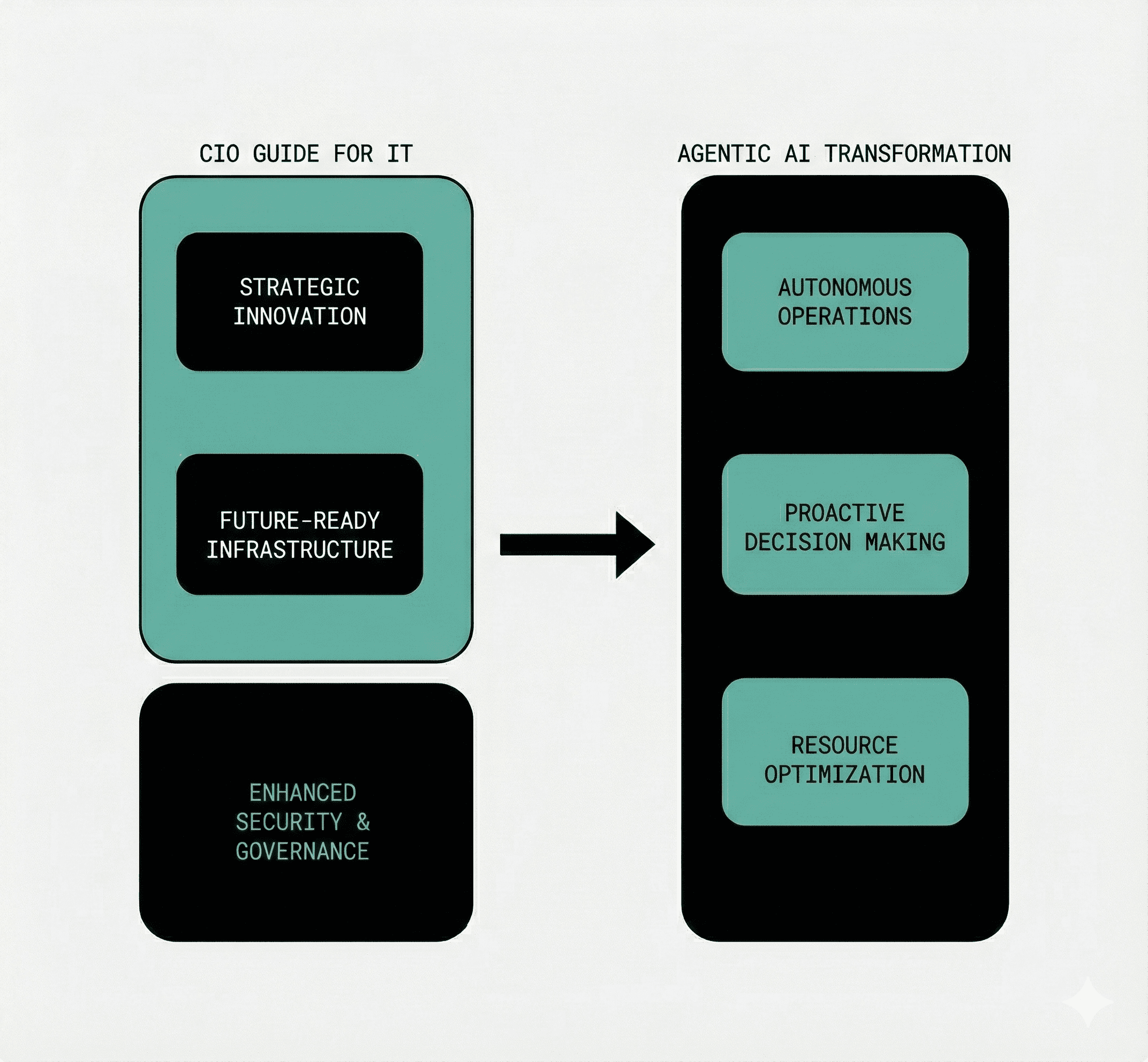
With great power comes the need for "adult supervision." As agents begin to execute transactions and modify data, the CIO’s role evolves from a service provider to an Agentic Architect. The priority shifts to governance, security, and orchestration. CIOs must now define the "rules of engagement" for these digital workers. It isn’t just about making the technology work; it’s about ensuring it works safely and predictably within the corporate infrastructure. The CIO becomes the bridge between the C-suite’s strategic vision for AI and the operational reality of managing a workforce of digital agents.
1. The Shift to Autonomous Bundling
The narrative involves a critical evolution: the transition from "chatbots" that retrieve information to "autonomous agents" that act. For the enterprise, this means the end of siloed AI experiments. The real value lies in bundling these capabilities—integrating specialized Vertical AI Agents (tailored for specific industries or functions like Supply Chain, Legal, or HR) directly into core business processes. At Stexion Tech Labs, we see 2025 not just as the year of the agent, but as the year of the Integrated Agentic Workflow, where distinct AI capabilities are bundled to solve complex, multi-step business problems without constant human hand-holding.
2. Vertical Agents & Deep Integration
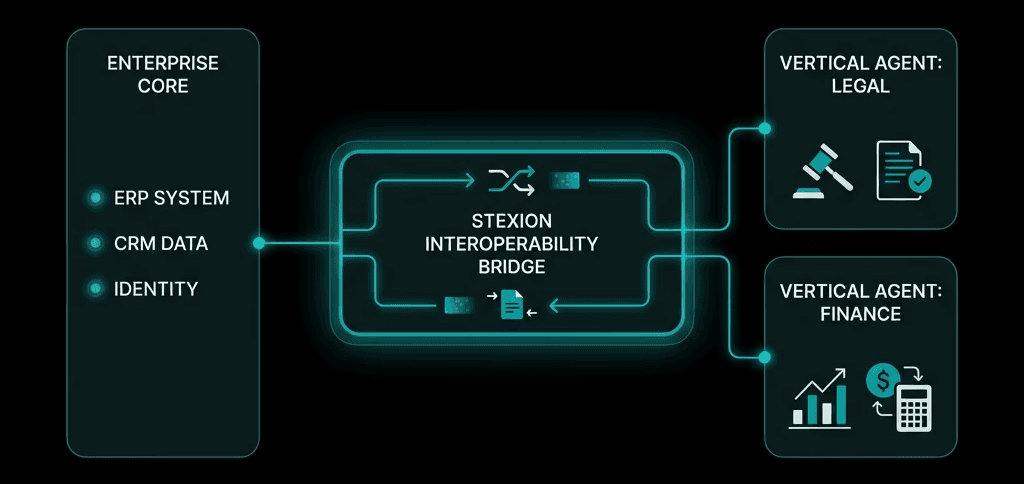
Generic models are insufficient for enterprise rigor. The future belongs to "Vertical Agents"—highly specialized AI models trained on deep domain expertise. However, a powerful Legal Agent and a robust Logistics Agent are useless if they cannot communicate. The challenge—and the Stexion solution—is the seamless integration of these vertical specialists. By bundling these agents together, enterprises can create cross-functional workflows where a contract anomaly detected by a Legal Agent automatically triggers a hold in the Logistics Agent’s dispatch queue. This is "Business Smart" efficiency: intelligent, interconnected, and immediate.
3. The CIO as the Agentic Architect
With great power comes the need for "adult supervision." As agents begin to execute transactions and modify data, the CIO’s role evolves from a service provider to an Agentic Architect. The priority shifts to governance, security, and orchestration. CIOs must now define the "rules of engagement" for these digital workers. It isn’t just about making the technology work; it’s about ensuring it works safely and predictably within the corporate infrastructure. The CIO becomes the bridge between the C-suite’s strategic vision for AI and the operational reality of managing a workforce of digital agents.